Ubique Adsum

Ubique Adsum is a working group based at ÉTS. MEDINT CBRNE is a contractual partner and service provider for Ubique Adsum. Its research program aims to develop technologies and know-how for better patient care in natural or man-made disasters and austere environments, and includes a mobile laboratory. Based on fluid mechanics and military medicine, the main pillar of this research is chemical, biological, radiological, nuclear and explosive (CBRNE) defense.
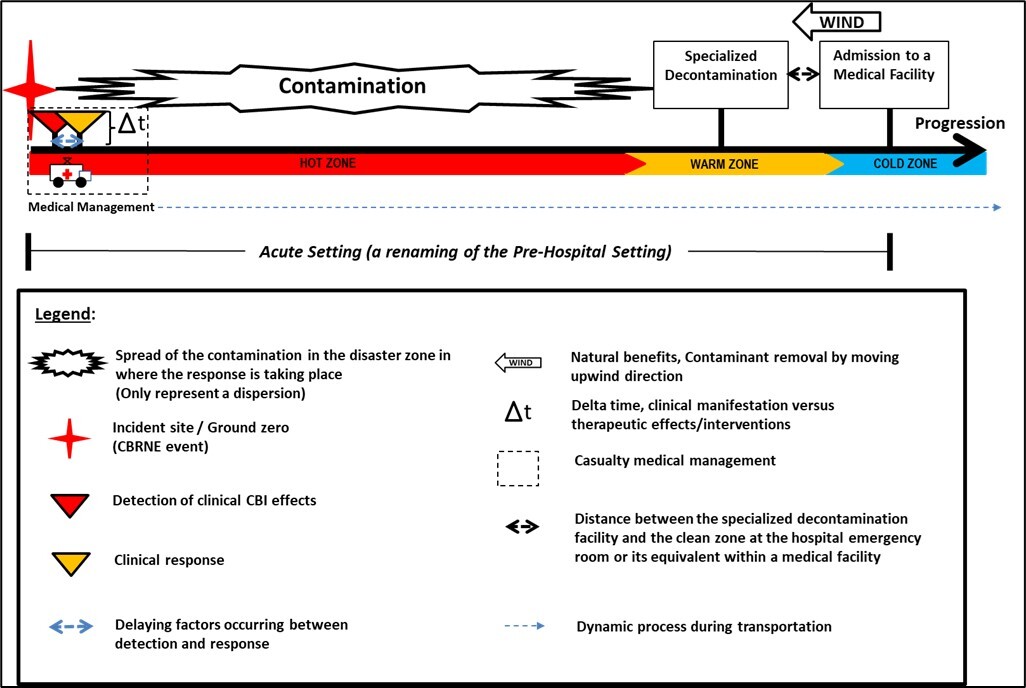
Very little clinical research has been conducted in these environments due to the lack of quality data. The group focuses on the pre-hospital zone, renamed the acute zone.
Source: A New Laboratory at ÉTS: Ubique-Adsum — Stéphane Bourassa, Giuseppe Di Labbio, Louis Dufresne (November 27, 2024)
The VIMY Program — Medical Extraction of Mass Casualties
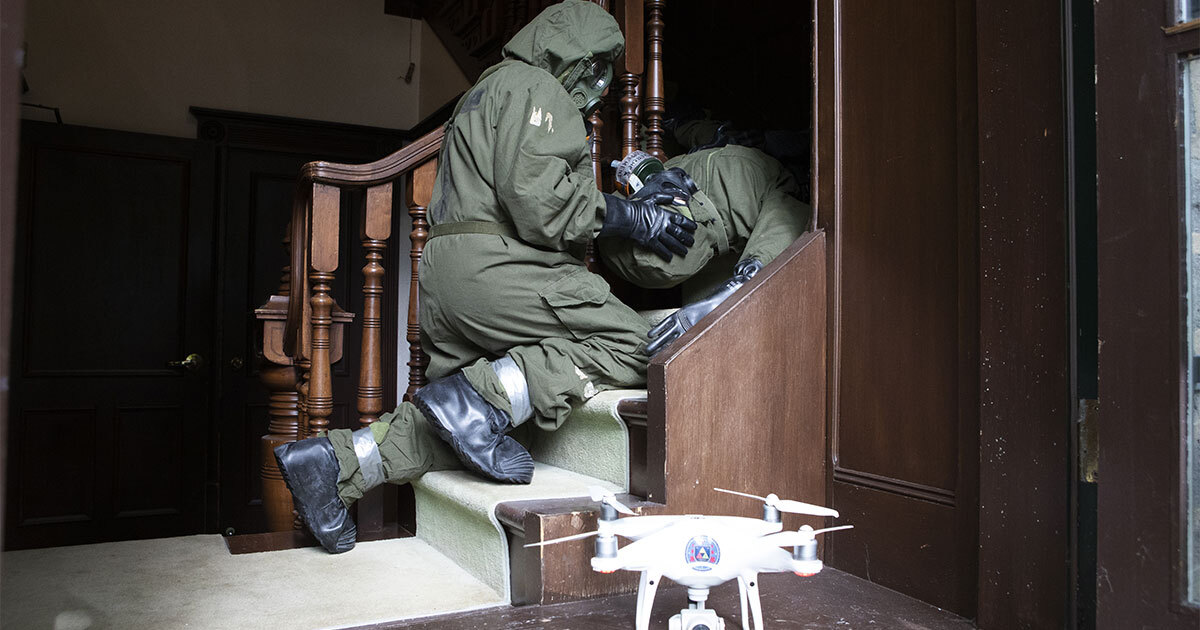
Based on artificial intelligence, this program uses drones, robots and other automated systems to manage multiple victims in the event of a disaster. The aim is to facilitate the task of clinical staff by supporting them in their activities: physiological monitoring, triage, diagnosis, initiation of treatment, decision-making.
Part of this research involves the development of a drone ambulance, and a dual-triage algorithm based on physiological and behavioral data.
The Ypres Program — Respiratory Protection
The Ypres program focuses on improving understanding of respiratory protection used in clinical care, and on improving respiratory protection equipment such as gas masks. The group is advancing two respiratory assistance inventions applied to gas masks, and a flow-pressure measurement system. Modeling is used to study respiratory gas flows, both in terms of protection and respiratory management of patients.
Gladiator Program — Mobile Laboratory Development
The Gladiator program is a mobile laboratory research and development program designed to study disaster and harsh environments in the field. The design of this laboratory includes a methodological simulation framework, using both real and simulated data.